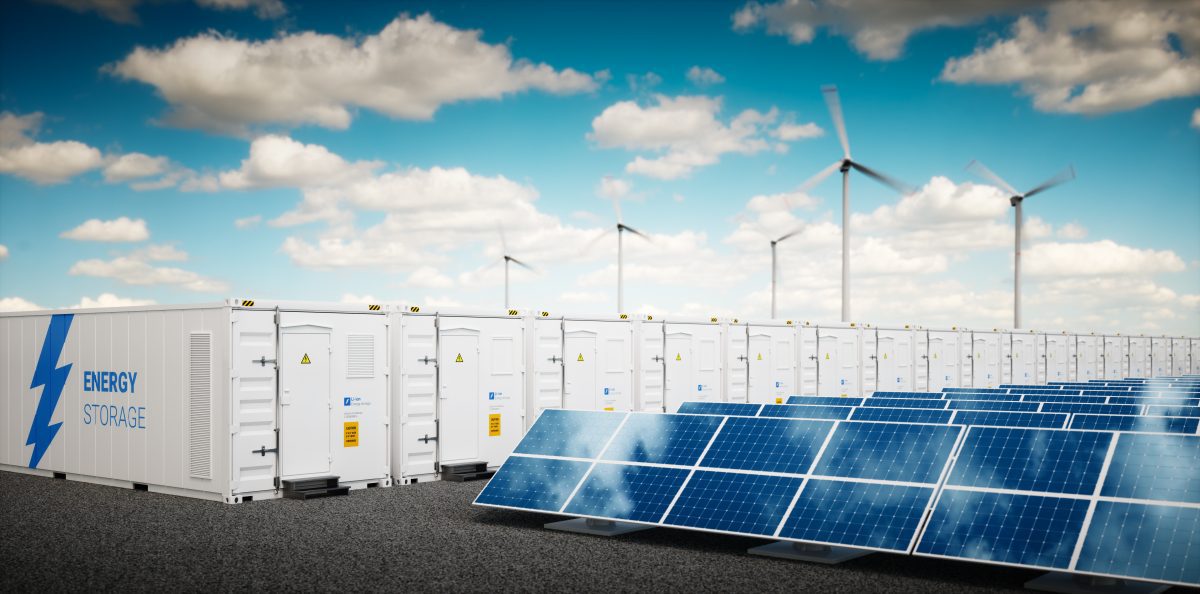
In 2024, Texas stood at an inflection point. Record-breaking electricity demand, accelerating population growth, and increasingly extreme weather were placing unprecedented strain on the state’s electric grid. At the same time, battery energy storage systems (BESS) were rapidly scaling across Texas, delivering fast, flexible power exactly when the grid needed it most. Yet, despite their growing importance, energy storage technologies were poorly understood in statute and at risk of regulation through frameworks designed for entirely different resources. It was in this moment that the Lone Star Energy Storage Alliance (LESA) was established.
Created as a cohesive and independent voice for stand-alone energy storage companies, LESA emerged to ensure that stationary energy storage was accurately understood, appropriately regulated, and safely integrated into Texas’s energy system distinct from renewable generation and grounded in technical reality. From its inception, LESA focused on one goal: to get the policy right before it got locked in wrong.
From Uncertainty to Clarity: Legislative Leadership in the 89th Texas Legislature
During the Texas 89th Legislative Session, LESA quickly became a trusted resource for lawmakers navigating unfamiliar and highly technical energy storage issues. Working directly with bill authors, committee leadership, and legislative staff, LESA coordinated testimony, shaped statutory language, and provided plain-spoken technical education to support informed decision-making.
That leadership resulted in the successful passage of two landmark bills that codified statewide standards for BESS operations:
- H.B. 3809 / S.B. 1824 — Battery Energy Storage Facility Decommissioning Standards
This legislation established clear end-of-life and decommissioning requirements for BESS facilities, including site restoration, recycling protocols, and financial assurance mechanisms aligned with best practices used nationwide. - H.B. 3824 / S.B. 1825 — Battery Energy Storage Facility Fire Safety Standards
The bill created uniform fire prevention, emergency response, and coordination standards across Texas, aligning local requirements with nationally recognized benchmarks such as NFPA 855 and UL 9540.
To support passage, LESA developed and circulated detailed technical fact sheets and commissioning/decommissioning guidance that translated complex safety standards into practical, enforceable policy. These materials gave lawmakers confidence that energy storage safety could be addressed without stalling innovation or fragmenting local regulations.
Quietly Preventing Bad Policy from Becoming Law
Just as critical as the bills that passed were the bills that did not.
Throughout the session, LESA monitored and engaged on several proposals that posed unintended risks to energy storage by misclassifying BESS or imposing technically unworkable requirements:
- S.B. 388 — Dispatchable Energy Credits
This bill threatened to classify battery storage as non-dispatchable and impose purchase obligations designed for other resources. LESA worked with Senate leadership to clarify definitions, resulting in final language that explicitly excluded batteries. - S.B. 715 / H.B. 3356 — Reliability Standards
Proposed 24-hour operational mandates and retroactive penalties were infeasible for storage assets. LESA coordinated member input and technical briefings, and the bill ultimately failed to advance. - S.B. 819 — Public Interest Determinations
New siting requirements risked being extended to storage projects. LESA engaged key offices to maintain explicit storage exclusions, and the bill died in committee without BESS inclusion.
These interventions ensured that energy storage was not regulated by accident, preserving the sector’s ability to operate as a flexible, reliability-enhancing grid resource.
Proof That Policy Matters: Real-World Impact
LESA’s legislative advocacy was reinforced with clear, data-driven education demonstrating that energy storage is already delivering tangible benefits to Texans:
- Stronger Grid Reliability: After Texas added more than 10 GW of storage, ERCOT conservation notices fell from 11 in 2023 to just two during 2024’s Winter Storm Heather.
- Lower Electricity Costs: In summer 2024, real-time electricity prices averaged $160/MWh lower than 2023, generating more than $750 million in customer savings.
- Economic Growth: Since 2020, battery storage has driven nearly $12 billion in investment, $148 million in state and local tax revenue, and $118 million in land lease payments to Texas landowners.
These outcomes helped legislators move from abstract debate to demonstrated public benefit, cementing LESA’s role as a credible, solutions-oriented partner.
Without LESA: The Counterfactual
Without LESA’s intervention, Texas risked entering a new era of grid stress with fragmented safety rules, misclassified energy storage assets, and unworkable reliability mandates embedded in statute. Fire safety and decommissioning standards would have varied by jurisdiction. Batteries could have been regulated as non-dispatchable resources. Projects critical to grid stability could have stalled under requirements never designed for storage technologies.
In just its first year, LESA helped Texas strike the balance every energy market seeks: innovation with accountability, growth with safety, and speed with foresight. By combining legislative leadership with technical credibility and data-driven storytelling, LESA positioned Texas not just as a leader in energy deployment but as a leader in energy governance.